ABC PEST CONTROL
CALL US NOW ON
0800 5118129 OR 07970 454573
Same Day Service
Free Quote and Survey
Unmarked Vehicles
Wasp Control and Nest Removal
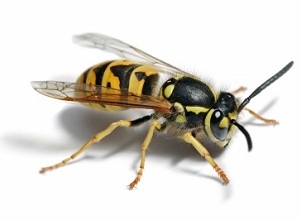
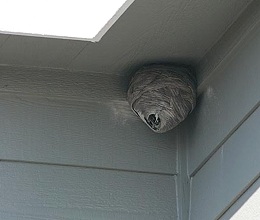
Description: Wasps can be up to 20mm in length. The common wasp has a yellow head with a black top, a black thorax with yellow on its sides, a yellow abdomen with black bands, black antennae and yellow legs. They have two pairs of membranous wings, the hind wings smaller than the forewings and linked to them by a row of hooks.
Biology: In spring the over-wintering queen wasps leave their hibernating quarters to seek nesting sites which could be a hole in the ground, a hollow tree or artificial structures such as eaves, lofts and garden sheds etc. The queen starts to build her nest with a papery material that she makes by chewing small pieces of wood mixed with saliva; this is known as wasp paper. She will raise the first few workers by her own efforts and those workers will then commence the enlargement of the nest and caring for the immature wasps to follow. Nest construction starts in earnest in June and will reach it's maximum size in September, when 5,000 to 10,000 workers may be present. These workers will forage for food up to 400 metres from the nest. The size of wasp colonies will vary from year to year; the severity of the previous winter is probably the key factor. In the autumn the young queens mate and leave the nest to hibernate, the rest of the nest dies out and the nest is never used again.
Control: It is recommended that professional personnel are used in the treatment of wasps. An insecticide will be used to cover the entrance to the nest. Returning wasps will carry the insecticide into the heart of the nest and within a few hours all wasps should be dead. Finding the nest is not always easy but following the flight pattern from a source of food could prove helpful. Wasp nests should be treated early or late in the day when the activity is at a minimum.
Wasp Nest Removal – Quick and Easy
If you need a quick and simple solution to wasp nest removal then you have come to the right place. Trust in us to put an end to your pest control problems and be safe in the knowledge that our wasp nest removal service is comprehensive, looking after your needs from beginning to end.
Never worry about pest or wasp control ever again – call on us for a quick and easy wasp nest removal service now.
Wasp nest removal – trust in us...
If you are suffering from wasp control problems in your home or garden, then look no further. We can help! ABC Pest Control offers a professional and comprehensive wasp nest removal service so you can relax with us.
Trust in us to deliver a wasp nest removal service that takes care of your wasp control problems once and for all! We insist that the treatment of wasp nest removal is always handled by trained experts - and we will conduct our services quickly and safely.
We will use a safe insecticide to eliminate wasps and pest from your home. Our pest control experts can also remove rats, mice, cockroaches, fleas, bed bugs, squirrels, birds, carpet beetles and other pests or vermin from your home or garden.
Regain control of your home and let us take the intruders out!
Pest Control London
Pest Control London specialises in wasp nest removal and other forms of pest control for homes, gardens and commercial buildings. Whether you need wasp nest removal from your loft, your basement or a hole in the ground in your back garden, we can help!
No wasp nest removal job is too difficult and with Pest Control London...
Although unprovoked wasp attacks are very rare, you are at risk from being stung if your food is attracting wasps or you have disturbed their nest. Wasps can sting you repeatedly and the consequences could be fatal for anyone who has an allergic reaction. Don't take the risk – get wasp nest removal now.
Wasp nest removal – get expert help!
At Pest Control London, we are committed to making you feel safe and comfortable in your home. So call on us for wasp nest removal or pest control and we will restore the harmony in your house once and for all.
All wasp nest removal services are executed with health and safety, and complete customer care in mind. Call for more information now.
We cover all forms of Pest Control, Rats, Mice, Cockroaches, Fleas, Bed Bugs, Wasps, Bees, Flies, Squirrels, Foxes, Birds, Moths, Pigeons and Carpet Beetles.
Pest Control London ~ Pest Control North London ~ Pest Control South East London ~ Pest Control Central London ~ Wasp Control London ~ Wasp Nest Removal London ~ Pest Control Essex